"Firm but Not Too Firm": How to Actually Get the Pressure You Want Without Lying on the Table
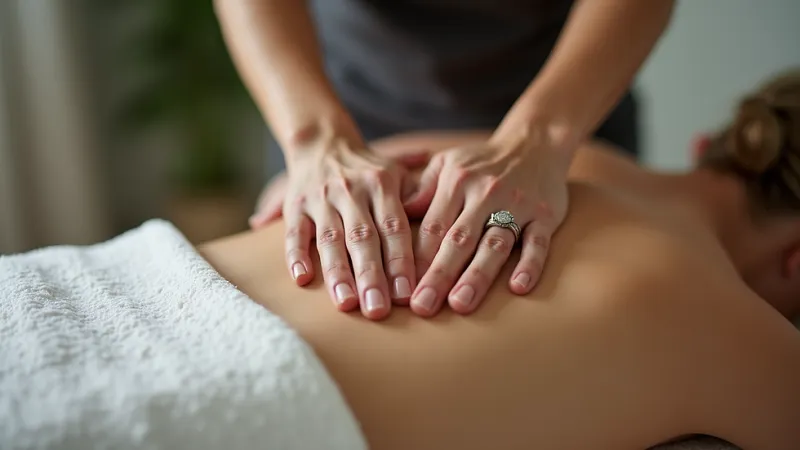
Photo: massage therapist hands applying pressure on client back spa, via static.wixstatic.com
There's a strange little comedy that plays out on massage tables across America every day. A client asks for "medium" pressure. The therapist delivers what they were trained to call medium. And somewhere around minute twenty, the client is lying there thinking, this is too much, but I asked for it, so I'll just breathe through it.
Sound familiar? You're not alone — and you're not being difficult. You're just speaking two different dialects of the same language. Let's fix that.
Why "Medium" Is the Most Ambiguous Word in the Building
Here's the thing your therapist knows that you might not: pressure isn't one number on a dial. It's a combination of how much force is applied, how slowly it's delivered, which layer of tissue it's reaching, and — this is the big one — how your particular body interprets all of that.
A marathon runner with dense calves and a desk worker with a stiff upper back can ask for the exact same "medium" and need completely different things. Add in the fact that nervous systems vary wildly — some people feel a light touch as deeply intrusive, others barely register it — and "medium" starts to sound less like a setting and more like a wish.
There's also a mismatch in reference points. When you say "firm," you might be picturing the pressure of a good stretch after a long flight. Your therapist might be picturing sustained work into deeper muscle layers that can feel intense in the moment but wonderful afterward. Neither of you is wrong. You're just describing different things with the same word.
The Real Vocabulary: What Therapists Actually Mean
A quick decoder for your next appointment:
Light isn't a lesser massage. It's often slow, soothing work designed to calm the nervous system — think relaxation, circulation, and giving your body permission to downshift. If you're stressed, sleep-deprived, or sensitive to touch, this might be exactly what you need, not a watered-down version of the "real thing."
Medium is the conversational default: enough contact to work through surface tension, gentle enough that you can fully relax. On a well-calibrated table, this should feel like a satisfying exhale, not a negotiation.
Firm means sustained, targeted pressure — often slower work that sinks into specific tight spots. Done well, it can feel like a "hurts so good" release. Done too fast or too broad, it just feels like getting squeezed.
Deep tissue is not the same as "firm everything, everywhere." It's a specific approach to specific problem areas. Asking for deep tissue head to toe is like asking a chef to salt every dish at maximum — technically possible, rarely what you actually want.
"Go Harder" Isn't Always the Fix for That Knot
We get it — that knot between your shoulder blades feels like it's been there since 2019, and the instinct is to bulldoze it. But here's what's actually happening under your skin: a trigger point is a hypersensitive patch of muscle that's essentially in protective mode. Cranking pressure on a guarded muscle often makes it guard harder.
Skilled therapists work with the nervous system, not against it. Sometimes the deepest release comes from sustained, moderate pressure held long enough for the muscle to say "oh, we're safe" and let go on its own. Sometimes it comes from working the surrounding area so the hotspot finally relaxes by proxy. Pain that makes you clench, hold your breath, or mentally flee the room is usually counterproductive — your body is busy defending, not releasing.
A good rule of thumb we share with first-timers: pressure should feel like a seven out of ten at most. Intense enough to matter, comfortable enough that you could take a nap right there.
How to Speak Up Mid-Session (Without Feeling Awkward)
Here's a secret: your therapist wants the feedback. Truly. We can't read minds through the drape, and a one-word adjustment saves us both from you white-knuckling the face cradle for an hour.
Steal these phrases — they're short, specific, and completely normal to say:
- "A little lighter, please." Magic words. No explanation needed.
- "Can you go a bit deeper there?" Specific spot, specific ask.
- "That spot — right there. Can you stay on it?" Therapists love this one.
- "Slower is good." Slows the pace without changing pressure.
- "That's my edge — hold it right there." Tells us we've hit your seven out of ten.
- "Everything's great except the legs — lighter there." Mixed requests are totally fine.
And remember: feedback has a shelf life. Pressure that felt perfect at minute ten can feel like too much by minute forty as your nervous system settles. Speaking up at minute forty-two isn't fussy. It's accurate.
One more thing — if you're ever unsure whether something feels right, that's information too. A good therapist would rather adjust five times than have you leave with a story you never told them.
Your Pre-Appointment Cheat Sheet
Before your next session at Namaste, take sixty seconds and answer these three questions for yourself:
- How do I want to feel walking out? Melted and sleepy, or looser and energized? That answer shapes pressure more than any muscle chart.
- Where's my seven? Think back to a massage that felt great. Where was the line between "working" and "too much"?
- What's my one spot? Most people have one area that's the current headline. Name it out loud at the start.
Bring those answers to the table and suddenly "medium" stops being a guess. It becomes a conversation — which, honestly, is what it always should have been.
The word on our sign means "the light in me honors the light in you," and part of that honor is listening: to your body, and to your words. Tell us what pressure means to you. We're fluent in translation.