You Weren't Resting — You Were Just Staring at the Ceiling: The Faux Rest Problem

Photo: Tomi 4K', CC BY 2.0, via Wikimedia Commons
Here's an uncomfortable question: last Sunday, when you spent four hours horizontal on the couch with your phone an inch from your face — did you actually rest? Or did you just change location while your brain kept running?
If you felt guilty about booking a massage last month but felt zero guilt about burning a Saturday to "do nothing," this article is for you. Because a lot of what Americans call rest is what I've come to think of as faux rest: time that looks like recovery from the outside but leaves your nervous system exactly where it started.
What Faux Rest Actually Looks Like
Faux rest wears a disguise. Some of its greatest hits:
- The scroll-and-slump. You're on the couch, but you're also reading work emails, absorbing bad news, and micro-deciding what to watch next. Your body is still; your brain is in seven meetings.
- The revenge sleep-in. You sleep until 11 on Saturday to "catch up," then wake up groggier and vaguely annoyed at the weekend for going too fast.
- The errand reset. You tell yourself grocery shopping and laundry are restful because they're not your job. They're not rest. They're just different labor.
- The TV coma. Three episodes deep, you feel less refreshed than when you started.
None of these make you lazy. They make you human in a culture that treats exhaustion like a badge and recovery like a luxury. But they share one flaw: they're almost entirely passive, and passive isn't the same as restorative.
Passive Rest vs. Active Rest — and the Missing Third Category
Sleep scientists and movement specialists generally draw a line between two kinds of recovery:
Passive rest is stopping. Sleep, sitting down, doing nothing. Essential — but only if your mind actually stops with you, which most of ours don't.
Active rest is doing something restorative that isn't your stressor: a walk, stretching, cooking a real meal, gentle movement. It often recovers you faster than collapsing, because it moves you — literally — out of the stress loop.
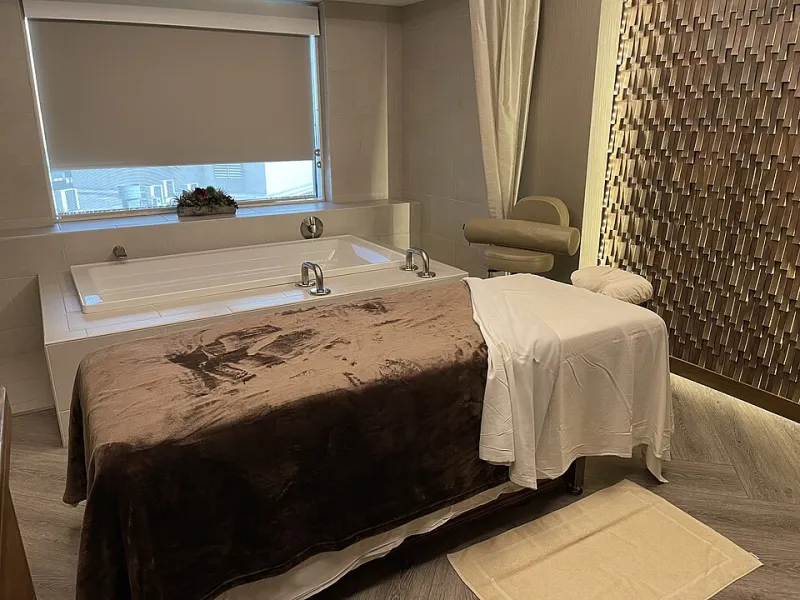
But there's a third category that busy professionals almost never get, and it's the one a massage delivers: guided rest. Hands-on bodywork is a rare state where someone else is doing the work of restoration for you. You can't half-effort a massage. You can't check your email mid-session. The table holds you; the therapist holds the plan; your only job is to breathe.
That's the gap naps and Netflix can't fill. A nap gives you unconsciousness. A massage gives you attended rest — and the research on touch therapy consistently links it to reduced cortisol and improved mood in a way that screen time simply doesn't.
Five Signs You're Running on Faux Rest
- You wake up tired despite adequate hours in bed.
- Your shoulders live near your ears, and you only notice when someone points it out.
- Weekends don't recharge you — Monday arrives feeling identical to Friday.
- You can't remember the last time someone touched your shoulders in a non-handshake context.
- "Relaxing" makes you restless. Ten minutes of quiet and you're reaching for your phone.
If you checked two or more, you're not broken. You're just running recovery strategies that stopped working years ago.
The One-Appointment Fix (and Yes, You're Allowed)
Here's the pitch, and it's modest: one massage a month. Not a spa-day fantasy requiring a free Saturday and a small loan. One standing appointment, sixty minutes, on the calendar like a dentist visit.
Why monthly? Because bodywork has a cumulative effect. A single massage is a lovely afternoon; a monthly rhythm actually retrains your baseline — loosening the chronic holding patterns in your neck and shoulders before they calcify into headaches and poor sleep. Think of it like going to the gym, except the gym is extremely comfortable and involves a heated table.
And about the guilt — the voice that says you haven't earned it, that you should be productive, that it's indulgent: consider that every high-performing system you admire, from athletes to surgeons, schedules recovery deliberately. Rest isn't the reward for finishing the work. It's the infrastructure that makes the work possible.
Make It a Rhythm, Not a Rescue
The trick to keeping the habit: attach it to something. First Friday of the month. The week after your big monthly deadline. Book the next one before you leave the table — future-you will be grateful, and future-you is the whole point.
Faux rest will always be there, glowing on the couch, offering four hours that feel like nothing. Real rest requires slightly more effort and a lot less phone. Start with one hour a month.
Your shoulders have been carrying the argument long enough.