Why We Ask About Your Desk, Your Commute, and Yes, Your Dog: The Intake Form, Decoded
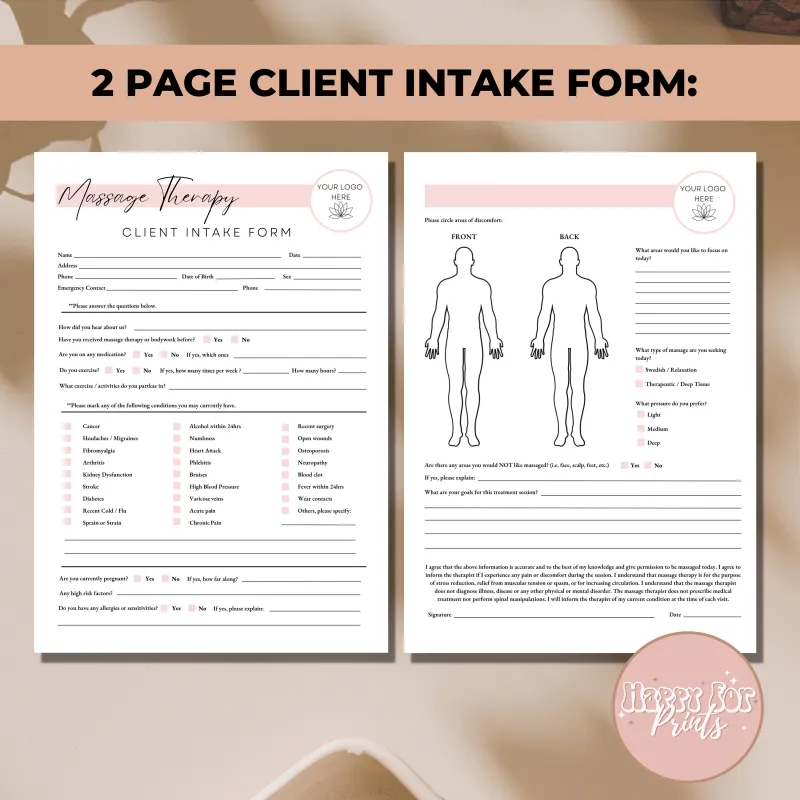
Photo: massage therapist consulting with client intake form spa, via i.etsystatic.com
You've just settled onto the table, the room smells faintly of lavender, and before the first stroke happens, your therapist pulls up a chair and starts asking questions. How'd you sleep? Where do you work? Do you sit all day? Wait — how's your dog doing?
It might feel like chit-chat to fill the silence. It's not. That intake conversation is the single most important five minutes of your appointment, and understanding what's happening behind those questions can transform what you get out of every session.
Your Body Tells One Story, But Your Life Tells the Plot
Here's a truth every massage therapist knows: a knot in your shoulder is rarely just a knot in your shoulder. Bodies hold patterns, and patterns come from how you live.
When we ask about your desk setup, we're not making conversation about your 9-to-5. We're picturing the exact angle of your neck as you type, the way your shoulders creep toward your ears by 3 PM, whether your laptop has you twisted like a pretzel on the couch most evenings.
The sleep question? That's not small talk either. Poor sleep and chronic muscle tension feed each other in a loop — tight muscles make it harder to rest, and poor rest makes muscles less able to release. If you mention you toss and turn or wake up sore, your therapist will adjust pressure, focus areas, and even pacing to help break that cycle.
So Why the Dog Question?
Because pets — like commutes, kids, and caregiving — reveal physical load. Carrying a 25-pound dog up the stairs, crouching at a litter box, walking a leash-puller twice a day around the block: these are repetitive movements your body compensates for. The same goes for the toddler on your hip or the grocery haul from the car in one heroic trip (we see you, and we salute you).
None of this is judgment. It's detective work. Every detail helps us figure out why your lower back flares up on Mondays or why your right hip always feels sticky.
What Therapists Are Actually Listening For
Think of the intake as connecting dots across three categories:
- Mechanical habits — how you sit, stand, drive, sleep, and carry things
- Stress load — deadlines, life transitions, that ongoing renovation project
- Physical history — old injuries, surgeries, workouts, the occasional overzealous weekend pick-up game
A tight trapezius after a stressful quarter tells a different story than the same tightness after a road trip. Same muscle, completely different treatment approach.
The Honesty Dividend: Why 'I'm Fine' Costs You
Here's the thing most first-timers don't realize: the more honest your answers, the better your massage. Period.
If you downplay your stress, skip the part about your aching hip, or say "just the usual" when your body is anything but usual, you're asking your therapist to work with half a map. We're not looking for a medical history — we're looking for the truth of your week.
A few things worth mentioning even if they feel minor:
- That painkiller you took this morning
- The workout you're still sore from two days later
- Recent travel, even the fun kind
- If you're pregnant, recently injured, or managing a health condition
- If certain pressure levels have bothered you in past massages
None of this is oversharing. It's exactly the information that keeps your session safe and effective.
The Questions You Should Be Asking Back
The intake is a two-way street. If you've ever wondered whether you should speak up mid-session — you should. Your therapist genuinely wants to know:
- "Is this pressure right for you?"
- "Any areas you'd like me to skip or spend extra time on?"
- "How are you feeling about the temperature and the bolster under your knees?"
And you're allowed to ask things too: why they're working a spot that seems unrelated to where it hurts, what that crunchy feeling under your shoulder blade is, what stretches might help between visits.
Namaste Means Seeing the Whole Picture
The word "namaste" — the one on our sign and in our name — loosely means "the divine in me honors the divine in you." Practically, that translates to this: we don't treat shoulders. We treat people who happen to have shoulders, along with jobs, commutes, dogs, deadlines, and lives.
So next time you settle in and hear, "So, how have you been sleeping?" — know that it's the beginning of a conversation your body has been trying to have for a while. Answer honestly. Your muscles will thank you for it.
Ready to book a session where the whole you gets attention? We'll have the intake form ready — and yes, we really do want to hear about your dog.