Take a Peek at Your Nightstand — It's Been Keeping Notes on Your Sleep
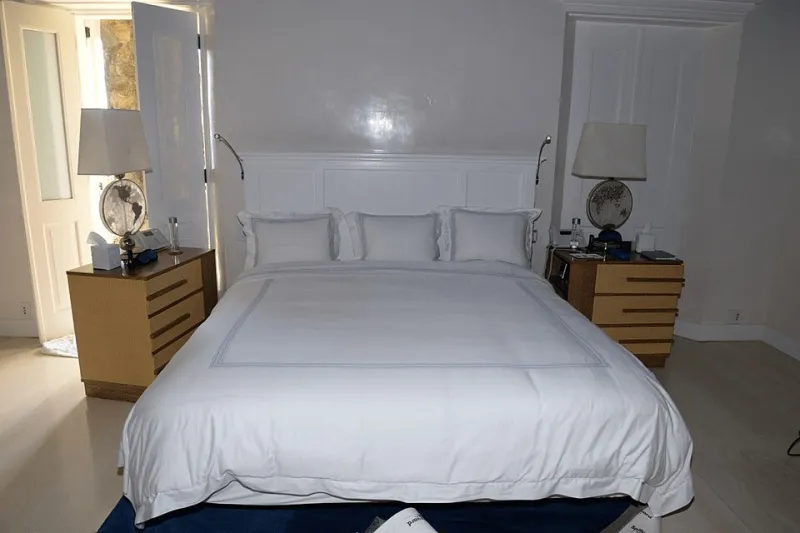
Photo: Federal Bureau of Investigation, Public domain, via Wikimedia Commons
Go ahead. Look at your nightstand right now.
Not tomorrow, not this weekend. Right now. Because that little piece of furniture is quietly collecting evidence about your sleep — and most of us have never thought to read it.
At our spa, we spend a lot of time asking clients about their sleep. It's part of the intake, part of the conversation, part of figuring out where tension actually lives. And over the years, we've noticed something funny: people's nightstands tell us almost as much as their shoulders do.
So let's do a little audit together. No judgment — just curiosity.
The Phone Charging Station (a.k.a. the Enemy Encampment)
If your phone lives on your nightstand — especially if it's face-up, within arm's reach — you've basically invited your inbox into bed with you. Studies on screen time and sleep keep confirming what most of us already suspect: that late-night scroll delays melatonin release and keeps your brain in a low-grade state of alert.
What it reveals: your nervous system isn't getting the memo that the day is over.
What to do: charge the phone across the room. Or better yet, outside the bedroom entirely. Yes, you'll survive. Buy the $12 alarm clock. It's the cheapest sleep upgrade in America.
The Melatonin Bottle
A half-used bottle of melatonin says something specific: you've tried to outsource sleep to a supplement, and it's only sort of working. Melatonin can help with timing — shifting your rhythm after travel or schedule changes — but it can't relax muscles that have been clenched since 7 AM, and it can't quiet a mind that's still drafting tomorrow's emails.
What it reveals: you're treating sleep as a chemical problem when part of it is a physical one.
What to do: supplements aside, ask what your body is holding onto. Literally. Where are you tense at 11 PM? For most of our clients, it's the neck, shoulders, and jaw — the exact areas a focused massage session addresses better than anything on a shelf at CVS.
The Heating Pad (Still Plugged In, Somehow)
A heating pad on the nightstand is a telltale sign of chronic muscle tension. Heat feels great because it signals your muscles to let go — temporarily. But if you need it every night, you're managing symptoms, not resolving them.
What it reveals: your body is carrying tension it can't release on its own.
What to do: this is where regular massage therapy earns its keep. A skilled therapist works through the adhesions and trigger points that heat alone can't touch, so your muscles stop defaulting to that clenched state in the first place.
The Half-Finished Journal
You bought it in January with the best intentions. There are four entries, all from the same week. This one's not a failure — it's a clue. Journaling before bed works because it offloads the mental loop your brain wants to keep spinning. You stopped writing, but the looping didn't stop.
What it reveals: your mind needs a runway before sleep, and it isn't getting one.
What to do: you don't need a beautiful journaling practice. A sticky note with tomorrow's top three worries works just as well. The point is the offload, not the prose.
The Pile of Books You're "Going to Read"
Reading before bed is genuinely one of the best wind-down habits there is. But if the stack has become furniture, it might be a symbol of a bigger pattern: you keep planning to rest but never quite executing.
What it reveals: rest has become aspirational rather than actual. (Sound familiar? We've written about this before — resting isn't the same as staring at the ceiling.)
What to do: pick one book. Put the rest in a drawer. Lower the bar until rest is something you actually do.
Building Your Own Bedside Reset
Here's the honest truth from the massage table: no single tweak fixes sleep. But a nightstand audit gives you a starting point, and layering small changes compounds fast.
Try this for two weeks:
- Phone out of the bedroom. Non-negotiable.
- Five minutes of offloading — sticky note, journal, whatever gets tomorrow out of your head.
- One heat-free evening to see how much tension you're actually carrying.
- One massage session to address the physical layer your pillow and supplements can't reach.
That last one isn't a plug (okay, it's a little bit of a plug). But there's real overlap between the clients who sleep badly and the clients whose bodies hold tension like a sponge holds water. Massage doesn't replace good sleep hygiene — it removes the physical obstacles that make good sleep hygiene feel impossible.
The Namaste Takeaway
The word on our sign means something like "the light in me sees the light in you." It's a recognition — a noticing. Your nightstand audit is the same idea applied to yourself: noticing what's actually happening instead of what you assume is happening.
So tonight, take one honest look at that bedside table. It's been keeping notes on you for years. Maybe it's time to write back.