Your Shower Already Runs Every Morning. Here's How to Make It Do the Heavy Lifting for Your Nervous System.
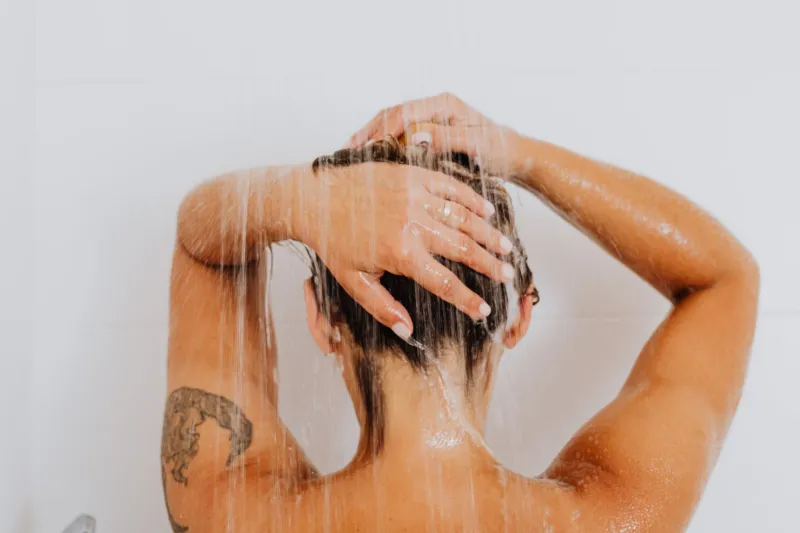
Here's an honest confession from a spa: some of the best nervous system work we know of doesn't happen on a massage table. It happens in your bathroom, every single morning, for free, in the last minute and a half of a shower you were taking anyway.
We're talking about the hot-cold finish — that jolt of cold water most Americans only experience when the hot water heater quits on a January morning in Ohio. Done on purpose, with your breath doing half the work, it's one of the simplest vagus nerve activations we know. And the vagus nerve, in case this is your first wellness article of the year, is the main highway of your parasympathetic nervous system — the part of you responsible for the phrase "rest and digest."
Why Your Morning Is Already Stacked Against You
Most of us wake up and immediately sprint. Alarm, phone, coffee, traffic, inbox. Before you've said a real sentence to another human, your cortisol has already spiked — which is normal, by the way. Your body is supposed to give you a morning bump of alertness. The problem is that stress on top of that bump — the frantic scroll, the 7:52 AM panic about a 8:00 meeting — piles unnecessary activation onto a system that's already running hot.
A deliberate cold finish at the end of your shower works like a volume knob. The sudden temperature change is a mild, controlled stressor, and your body's response to it trains the whole system: heart rate shifts, breathing deepens, and the vagus nerve gets a workout it will remember for hours. It's the same physiological logic behind why people walk out of a cold plunge feeling weirdly serene.
The 90-Second Script
You don't need an app, a subscription, or a Nordic fjord. You need a timer in your head and a willingness to be briefly uncomfortable. Here's the exact sequence we share with clients who can't make it in for a table session:
Seconds 0–30: Warm rinse, slow exhale. Stay under the warm water and start lengthening your exhales. Try a 4-count inhale through the nose, 6-count exhale through the mouth. That exhale longer than the inhale? That's the oldest breathwork trick in the book, and it starts the calming cascade before the cold even arrives.
Seconds 30–60: Warm to hot, then cut it. Let the water run slightly warmer for a few seconds — think of it as telling your body a story before the plot twist. Then turn the handle to cold. All the way. Not lukewarm-with-good-intentions. Cold.
Seconds 60–90: Breathe like you mean it. Here's where people fail. The instinct is to gasp, hold your breath, and tense every muscle from your shoulders to your jaw. Fight that. Instead: short, quick nasal inhales — think of a dog panting politely — then a long, controlled exhale. Three rounds. Your gasp reflex fades fast if you keep breathing on purpose.
That's it. Ninety seconds. Towel off, and notice how the water droplets feel on your arms before you pick up your phone. (The phone can wait. It's been waiting all night anyway.)
The Part Nobody Tells You: It's a Practice, Not a Stunt
The first week, you'll white-knuckle it. The second week, something shifts — the cold stops feeling like an attack and starts feeling like a question your body knows how to answer. That adaptation is the actual benefit. You're not just getting a jolt; you're rehearsing how to stay calm inside a stressor, which is a skill that transfers to traffic on the interstate, a tense meeting, or your kid's bedtime meltdown.
A few honest disclaimers, because we're a health business and we'd be failing you otherwise: cold exposure isn't right for everyone. If you have a heart condition, unmanaged blood pressure issues, or you're pregnant, talk to your doctor before making this a daily habit. And "cold" should be cold-but-safe — you're not training for an ice bath, you're finishing a shower.
From Your Bathroom to Our Table
We'll tell you a little secret about why we love teaching this one. The breathwork we guide on the massage table — the long exhales, the attention to sensation, the deliberate letting go — is exactly what this shower ritual rehearses. Clients who practice the 90-second finish at home tend to drop into their massage faster. Their shoulders already know the exit route.
So consider this your invitation to start where you are. You don't need a spa day to practice nervous system care, though we'd never talk you out of one. You need ninety seconds, a shower handle, and a breath you're willing to take slowly.
Namaste — and yes, that applies to your bathroom, too.