Thirty Minutes on the Table: The Appointment Everyone Underrates (and Our Busiest Clients Swear By)

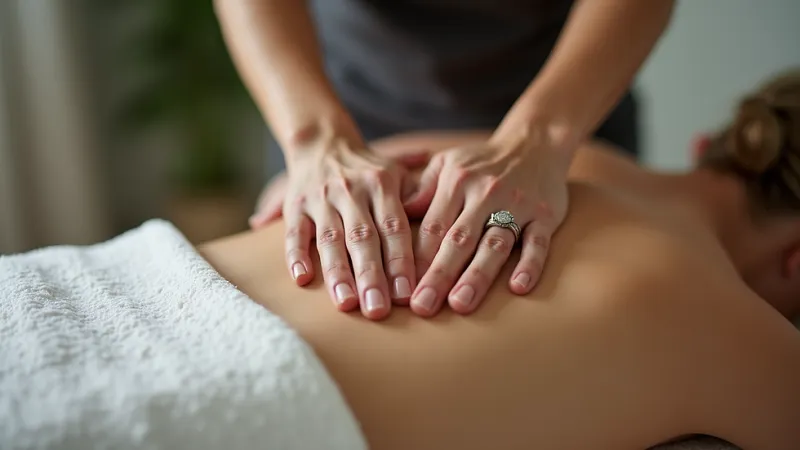
Photo: Shixart1985, CC BY 2.0, via Wikimedia Commons
Somewhere along the way, we all absorbed the idea that a massage only counts if it's an hour. Thirty minutes feels like the kids' meal of spa services — fine if you must, but not the real experience.
We'd like to officially retire that idea. After years of watching our booking calendar, we can tell you the half-hour session is quietly one of the most beloved options on our menu. Not because it's cheaper (though it is), but because it fits into actual human lives.
What a Therapist Can Actually Do in 30 Minutes
Here's the thing that surprises people: a focused half-hour isn't a shortened version of an hour massage. It's a different animal entirely.
When you book 30 minutes, your therapist isn't trying to cover everything head-to-toe. They're zeroing in. That means:
- A targeted upper-body session — neck, shoulders, and the spot between your shoulder blades where your office chair lives rent-free
- A lower-body reset — calves, hamstrings, and feet, ideal if you're on your feet all day or training for something
- A scalp-and-neck unwind — the tension-headache special, and a favorite of people who clench their jaw at their inbox
Twenty-five to twenty-eight minutes of skilled, specific work on one region often does more for that region than a scattered hour ever could. Focus is the feature, not the limitation.
The People the 30-Minute Format Was Made For
The lunch-break crowd. You can genuinely leave your desk, get worked on, and be back with time to grab a sandwich. Compare that to your usual "quick" 45-minute Target run.
The first-timer who's nervous. If you've never had a massage and the idea of a full hour with a stranger makes your stomach flip, 30 minutes is a low-stakes way to find out what it's all about. You learn what you like — the pressure, the room temperature, whether you want to chat or zone out — without committing to anything longer.
The maintenance person. If you already get regular bodywork, a half-hour between full sessions keeps things from stacking back up. Think of it like brushing your teeth between dental cleanings.
The "I have exactly one free window this week" person. Which is most of us, honestly.
Why Short Sessions Work (It's Not Just Scheduling Math)
There's a real physiological argument here. Muscle tension from desk posture is largely a circulation and habit problem — muscles held in one position for hours get starved of fresh blood and forget how to fully release. Frequent, shorter interventions interrupt that pattern better than occasional marathon sessions.
In other words, two 30-minute sessions a month may serve your shoulders better than one 60-minute session every six weeks. Consistency beats intensity when it comes to chronic tension.
Making the Most of Your Half Hour
A few tips from our team to get maximum value from a short session:
- Pick one problem area and say so upfront. "My shoulders and neck" gives your therapist a clear target. "Everything hurts" gives them an impossible mission in 30 minutes.
- Arrive five minutes early, not two minutes late. A short session with a rushed start is the one scenario where the format genuinely suffers.
- Skip the small talk if you want. Some of our best 30-minute sessions happen in near-total silence. Your therapist will take the cue.
- Book the next one before you leave. Short sessions work because they repeat.
Small Appointment, Real Results
There's a version of self-care culture that says if you can't do the full spa day, why bother? We think that's backwards. A half-hour of focused bodywork you actually take is worth infinitely more than the luxurious hour you keep rescheduling.
So the next time you're staring at the booking page thinking, "I don't have time for a whole massage" — you don't need one. You need thirty good minutes and a therapist who knows exactly where to put them.
Namaste — and see you on your lunch break.